1. The United States took on many more international commitments and obligations and without suprise to many, the US entered the war in 1917. Europe had become a mess of countries with many different allies of each other across borders which induced a collapse of the European peace. Woodrow Wilson could not remain neutral because he had strong ties with Britain and continued to trade with them although Germany had a blockade set up so they could not, making the US an allied power. The Germans then attacked the British ship, the Lusitania, enraging America and making them no longer neutral. The US had become prepared to participate in modern warfare over seas by growing their military forces to be very large very fast.
2.The question of whether America should make military and economic preparations for war and whether or not America should even consider entering the war were hot debate topics.
3. For the US, the involvment in WW1 was small a military struggle, but it was brief, decisive, and without great cost. Only 112,000 American soldiers died in the conflict, half of them
from infl uenza and other diseases rather than in combat.
4. From US participation in WWI, the economy was booming after the war was over, especially industrially. It sparked the years of prosperity that would follow in the roaring 20s and the war propelled the United States into a position of international prominence.
Sunday, April 23, 2017

Thursday, April 20, 2017
Poster set 2
I believe that the posters I reviewed did accomplish the goal of the American government during the time frame based off of the reading. The posters I reviewed were vibrant with colors, and very informative, mainly focusing on the food shortage problems in the US. Many different perspectives were taken in account including men, women and children. My posters were able to spread information very quickly to a wide audience about conserving food. Many Americans went meatless and wheatless in order to conserve food. People also created their own gardens to grow more food for themselves. Overall, americans saw the propoganda posters and received that message in the right way. They conserved food and ultimatley helped America win the war.
What I immediatley noticed on this poster is the red white and blue colors signifying America. The message the artists is trying to convey is that although the dad of the soldier is too old to fight, he can still serve his bit by buying war bonds to support the fight. The audience that the artists is trying to capture is the older parents and senior community. This poster differs from the ones I analyzed because it is focused on the war bonds and aimed at older people.

The first thing i noticed is the American flags and the Eagle, signifying freedom and America. The artist is trying to make you feel bad about not buying war bonds by talking directly to the reader and breaking the fourth wall and by questioning the readers american citizenship. The message is directed at all american citizens. This poster differs from the ones I analyzed because it is focused on the war bonds and breaks the fourth wall.

This first thing I noticed is the basket of food and the soldiers in the background. which signifies that food is just as important as the soldiers fighting. The artist is trying to convey that food is just important as the ammunition used during battle and that it should not be waster because it will help the country in the war in the long run. The message is directed at all american citizens. his poster differs from the ones I analyzed because it associates food with soldiers in battle.
 The first thing I noticed is the hat covered in stars filled with money, giving the message that all americans should buy warbands to supply money for the american war effort. The message is directed at all american adults who have money and who can buy warbaonds. his poster differs from the ones I analyzed because it is focused towards adults only and it is trying to convey that americans should buy warbonds.

What I immediatley noticed on this poster is the red white and blue colors signifying America. The message the artists is trying to convey is that although the dad of the soldier is too old to fight, he can still serve his bit by buying war bonds to support the fight. The audience that the artists is trying to capture is the older parents and senior community. This poster differs from the ones I analyzed because it is focused on the war bonds and aimed at older people.

The first thing i noticed is the American flags and the Eagle, signifying freedom and America. The artist is trying to make you feel bad about not buying war bonds by talking directly to the reader and breaking the fourth wall and by questioning the readers american citizenship. The message is directed at all american citizens. This poster differs from the ones I analyzed because it is focused on the war bonds and breaks the fourth wall.

This first thing I noticed is the basket of food and the soldiers in the background. which signifies that food is just as important as the soldiers fighting. The artist is trying to convey that food is just important as the ammunition used during battle and that it should not be waster because it will help the country in the war in the long run. The message is directed at all american citizens. his poster differs from the ones I analyzed because it associates food with soldiers in battle.


Monday, April 17, 2017
World War One Propoganda
I would describe propaganda as a form of motivational artwork that gets people to be apart of somthing, such as the army or a government group.
The actual definition of propoganda is "the spreading of ideas, information, or rumor for the purpose of helping or injuring an institution, a cause, or a person" Link
Link to Propoganda Posters
From the World cry food poster I immediatley notice the bright yellow corn stalks in the background and how to dad and the two boys are all wearing the same color shoes, pants, and shirt. I am also drawn to the word "Food" in the poster and because it has the biggest font out of any of the other words on the poster. The words " the world crys" are colored blood red, signifying death. The words "The spirt of '18" are located in the sky meaning, the only place for the future is up. I beleive that the artists message for this poster is that people should continue to live off the land in the year 1918 because if people continue to rely on stores for food, then the country will have a very large shortage of food. The artists wanted people to feel bad if they did not already farm because of the blood red text in "world", making people believe that they were causing the deaths of others. This poster is intented for the city folk because it shows farmers already doing there job, pretty much asking the city folk "Why aren't you helping with the food shortage?"
From the garden army poster I immediatley noticed what the women was wearing and how it looked like mens army clothing, besides the skirt. I was drawn to the plow because it signifies that the garden army really does hard work. I beleive that the artists message was that people should join this "army" to help with America's food shortage problems. This poster was directed at women because the person in the poster is a woman, and that since all men would be off fighting, that women should join to help in some form.
In the Little Americans poster, I immediatley noticed was how the child was saluting and how the phrase "save the wheat for our soldiers is italicized, meaning that it is the most important statement. I was most drawn to the floating bowl of some form of oatmeal that the child is saluting too. The overall message of this poster is that children should do what little part they can by eating oatmeal instead of wheat the the soldiers who are fighting hard can use it. This poster is directed at children because there is a child on the poster who is saluting, making it appear that the children doing there part are just important as the soldiers doing their part.
I am ok with the government spending my tax dollars on propoganda because I know that it will work because history has proved so, and in the long run, it will help the county be more succesful and safe.
The federal government felt it was necessary to invest in producing propoganda posters because in order for the country to effectivley wage war, they would need full support of the citizens. And since everyone wanted to stay out of the war, the government was required to create propoganda to win over the citizens.
The actual definition of propoganda is "the spreading of ideas, information, or rumor for the purpose of helping or injuring an institution, a cause, or a person" Link
Link to Propoganda Posters
From the World cry food poster I immediatley notice the bright yellow corn stalks in the background and how to dad and the two boys are all wearing the same color shoes, pants, and shirt. I am also drawn to the word "Food" in the poster and because it has the biggest font out of any of the other words on the poster. The words " the world crys" are colored blood red, signifying death. The words "The spirt of '18" are located in the sky meaning, the only place for the future is up. I beleive that the artists message for this poster is that people should continue to live off the land in the year 1918 because if people continue to rely on stores for food, then the country will have a very large shortage of food. The artists wanted people to feel bad if they did not already farm because of the blood red text in "world", making people believe that they were causing the deaths of others. This poster is intented for the city folk because it shows farmers already doing there job, pretty much asking the city folk "Why aren't you helping with the food shortage?"
From the garden army poster I immediatley noticed what the women was wearing and how it looked like mens army clothing, besides the skirt. I was drawn to the plow because it signifies that the garden army really does hard work. I beleive that the artists message was that people should join this "army" to help with America's food shortage problems. This poster was directed at women because the person in the poster is a woman, and that since all men would be off fighting, that women should join to help in some form.
In the Little Americans poster, I immediatley noticed was how the child was saluting and how the phrase "save the wheat for our soldiers is italicized, meaning that it is the most important statement. I was most drawn to the floating bowl of some form of oatmeal that the child is saluting too. The overall message of this poster is that children should do what little part they can by eating oatmeal instead of wheat the the soldiers who are fighting hard can use it. This poster is directed at children because there is a child on the poster who is saluting, making it appear that the children doing there part are just important as the soldiers doing their part.
I am ok with the government spending my tax dollars on propoganda because I know that it will work because history has proved so, and in the long run, it will help the county be more succesful and safe.
The federal government felt it was necessary to invest in producing propoganda posters because in order for the country to effectivley wage war, they would need full support of the citizens. And since everyone wanted to stay out of the war, the government was required to create propoganda to win over the citizens.
Tuesday, February 7, 2017
Control Over the Future
Looking at the big picutre, we have all the control in the world over our future. Every little decision by someone who is in power will have an effect on our future as a whole. Small decisions could create a lifechanging invention or send the world into an all out war. Even individual people will have an effect on our future. When I think of individuals changing the future of the world I like to think of the butterfly effect that ties along to the story British soldier who saw a helpless German soldier laying on the ground during WWI and he decided not to shoot him. That helpless German soldier ended up being hitler who commited terrible acts of killing over 6 million Jews and was part of a world war that killed millions of men across the world. The British soldier had know idea that would happen, but it goes to show the the smallest of moral decisions can change the future of the entire world.
Predictions From the 1900s and Predictions for the Future.
Boston Globe Prediction German chocolate company prediction
2. This list is more of a wish list of things that the people would want in the future.
3. The prediction that boston will have a population of 8,000,000 million people and there would be trips to the north pole and roofed cities, moving sidewalks, and a good weather machine were farfetched but they predicted many things right such as much improved health system, baseball being played at night, air conditioning, cell phones, blimps, airplanes, movable houses, submarines and movie theaters.
4. All of these predictions seem to be all focused on making life more effecient and interesting, such as making flying machines to get places faster and roofed cities to keep out weather. Making life more interesting by seeing places that nobody ever gets to see such as trips to the north pole and ventures under water to explore the depths of the ocean in a submarine.
5. Honestly I believe that life will stay the same and there will be no drastic changes in the future world. New scientific discoveries will be made and new and exciting gadgets will be invented but nothing will ever be extremley life changing. However I do believe that there will be another major war such as WWIII because of the constantly rising tensions that countries have with the US today.
2. This list is more of a wish list of things that the people would want in the future.
3. The prediction that boston will have a population of 8,000,000 million people and there would be trips to the north pole and roofed cities, moving sidewalks, and a good weather machine were farfetched but they predicted many things right such as much improved health system, baseball being played at night, air conditioning, cell phones, blimps, airplanes, movable houses, submarines and movie theaters.
4. All of these predictions seem to be all focused on making life more effecient and interesting, such as making flying machines to get places faster and roofed cities to keep out weather. Making life more interesting by seeing places that nobody ever gets to see such as trips to the north pole and ventures under water to explore the depths of the ocean in a submarine.
5. Honestly I believe that life will stay the same and there will be no drastic changes in the future world. New scientific discoveries will be made and new and exciting gadgets will be invented but nothing will ever be extremley life changing. However I do believe that there will be another major war such as WWIII because of the constantly rising tensions that countries have with the US today.
Sunday, February 5, 2017
Urban Life Essay on Urban Zoos and Human Zoos
In
modern urban society today, the society sees going to the zoo as time of
leisure. Going to the zoo is a great way to get out of the house with the
family and do something that is both educational and entertaining. During the
late 19th century and the dawn of the 20th century, the
zoo was also a place where friends and families went during their usually
sparse hours of leisure time. Zoos during the early 20th century
were almost always in big cities such as the Bronx Zoo in New York City which
would be labeled as and urban zoo. Urban zoos drew large crowds and were a
product of urbanization. As cities grew larger, there were more people who
needed activities for leisure time. Zoos were an excellent solution to this
problem because they provided a family friendly environment that was
entertaining and educating, just like the zoos of today. However, some zoos
crossed the line between what was morally right and wrong with human zoos,
causing great controversy among society. Urban Zoos are a very important trend
the we associate with urban life in the early 20th century because
of the leisure time it provided with education and recreation, despite the
controversy of human zoos.

The
Arrival of America’s zoos began in the last couple decades of the 19th
century in a response to the diminishing animal populations around the world.
Before the creation of zoos, Americans utilized the wildlife for both
entertainment and science. But as animal mass animal extinction was looming all
around the world, advocates for the preservation of wildlife began to promote
the use of the zoological garden as a third use of wildlife. The display of
live animals was primarily meant to educate America in conservation and the
need to preserve natural resources, particularly wildlife, as well as provide
recreation for the working class who needed a valuable way to spend their leisure
time. Thus, cities such as Philadelphia, Cincinnati, Washington DC, and New
York established the first American zoos in the late 19th century.

Recreation was perhaps one of the most popular reasons that people attended zoos. Since America’s landscape had change so much since colonial times, which called for the establishment of state parks, people wanted to see “what our country was like in the days when our fathers here killed deer and fought Indians.” Zoos would provide a healthy environment filled with crowds, noise, and complexities of urban life. The zoo was also a place where adults and children alike let their imaginations run wild through the zoos awesome wonders of beauty and nature which was available to the millions of people who could not travel and explore. The industrialization of America was the greatest reason why people could not see any wildlife at all. People would be walking around the city and all they would see was stray cats and dogs and maybe some birds. Zoos were truly an escape where people could go and see true wild animals that they would read in big-game hunting books. Although recreation was the main reason that people attended zoos, there were also many other people who attended for the science and education.

In
most zoos, the education of wildlife preservation will be heavily implied in
all of the exhibits. Collections of animals that were on the verge of possible
extinction would be specifically secured to educate on preserving the last of
their species. Prior to the creation of zoos, very little concern was brought
up toward the preservation of wildlife. Hunters had started a move in the direction
of preservation, but no hunting regulations were ever established by the
federal government. Zoos became known as the protectors and preservers of America’s
wildlife. Zoos would scientifically educate urban people on the limitations of
wildlife populations because they believed that urban people hardly paid
attention to the decimation of wildlife and nature resulting from exponential industrial
growth. Overall, the zoos hope was to create and intelligent love for nature
and preservation for all urbanized citizens through modern zoological knowledge
and research. But unfortunately, some zoos had many immoral and inhumane
problems with a few of their exhibits.


In September of 1906 the Bronx zoo opened a new exhibit that would display humans from the oceanic region of the world or from areas in Africa such as the Congo. These people were stored in the same habitats as the monkeys, gorillas and orangutans. They would draw large crowds because then would entertain by shooting bows and arrows at targets, making amusing faces, and drinking soda. Just two days after the exhibit opened, NY times wrote “and there could be no doubt that to the majority the joint man-and-monkey exhibition was the most interesting sight in Bronx Park.” The whole situation and idea was inhuman and sparked huge controversy from black clergymen such as Rev. James H. Gordon, superintendent of the Howard Colored Orphan Asylum in Brooklyn. James H. Gordon said “Our race, we think, is depressed enough, without exhibiting one of us with the apes… We think we are worthy of being considered human beings, with souls. “Although having human zoos was very inhumane and morally wrong, racism pervaded New York during this time and the exhibits drew very large crowds which provided people with something to do during their leisure time. Thankfully human zoos were very short lived because of the start of World War I in 1914 which halted passenger ship traffic and thus the import of the people for these terribly immoral human zoos.

Urban
Zoos are a very important trend the we associate with urban life in the early
20th century because of the leisure time it provided with education
and recreation, despite the controversy of human zoos. During the late 19th
and early 20th centuries, urban expansion was at an all-time high.
The more people there were the more options the people needed for leisure time.
Zoos were a great use of leisure time because of the recreation they provided,
opening up people’s imaginations to wildlife and seeing things that they had
only read about in books. Not only were zoos recreational but they also
educated on the topic of preservations that saved lots of species from
extinction. Zoos had their moments that they shouldn’t be proud of as well as the human zoos. But although they were very wrong, they drew in huge crowds and
only lasted about a decade. When we look back today, zoos should be considered a
very important trend that we associate with urban life.
Works Cited
"10 Pictures of Europe's Shameful "Human
Zoos"." Exposing The Truth.
N.p., 29 Sept. 2015. Web. 05 Feb. 2017.
This source gave me an idea of what exactly was happening inside of these human zoos through pictures. These pictures are very powerful because it shows the hurt on the peoples faces in the zoos.
This source gave me an idea of what exactly was happening inside of these human zoos through pictures. These pictures are very powerful because it shows the hurt on the peoples faces in the zoos.
Admin. "HAUNTED FILES AT A/P/A." HAUNTED FILES AT APA. N.p., n.d. Web. 05
Feb. 2017.
This source gave the story of ota benga and why the human zoos attracted such large crowds. Also gave to logic behind why people beleived that these humans should be in zoos.
This source gave the story of ota benga and why the human zoos attracted such large crowds. Also gave to logic behind why people beleived that these humans should be in zoos.
Keller, Mitch. "The Scandal at the Zoo." The New York Times. The New York Times,
05 Aug. 2006. Web. 05 Feb. 2017.
This source gave the backstory and origins of human zoos and how it translated to the bronx zoo in 1906. Also gave why human zoos stopped entirley in the US, because of WWI.
This source gave the backstory and origins of human zoos and how it translated to the bronx zoo in 1906. Also gave why human zoos stopped entirley in the US, because of WWI.
Schofield, Hugh. "Human Zoos: When Real People
Were Exhibits." BBC News. BBC,
27 Dec. 2011. Web. 05 Feb. 2017.
Even more info about human zoos from BBC, also gave info about human zoos from other places around the world, specifically in europe such as the bustling city of Paris.
Even more info about human zoos from BBC, also gave info about human zoos from other places around the world, specifically in europe such as the bustling city of Paris.
"Search Results." Search Results: "Zoos--Washington+(D.C.)--1890-1900." -
Prints & Photographs Online Catalog (Library of Congress). N.p., n.d.
Web. 05 Feb. 2017.
Primary source photo gallery of people at different zoos around the country.
Primary source photo gallery of people at different zoos around the country.
Stott, Jeffery R. The
Historical Origins of the Zoological Park in American Thought. N.p.: n.p.,
n.d. Print.
Gave the historical information about the origins of zoos in the us and why people would attend them in the masses. I got almost all of my info about zoos in general from this source because it had lots of great information from a scholarly source in JSTOR.
Gave the historical information about the origins of zoos in the us and why people would attend them in the masses. I got almost all of my info about zoos in general from this source because it had lots of great information from a scholarly source in JSTOR.
Tuesday, December 13, 2016
Ghost Ship Warehouse Fires
1. The Ghost Ship warehouse was one of many converted warehouses in Oakland that serve as a work and living haven for a mix of musicians and artists from jewelers to poets to tattoo artists and photographers. Its purpose was to nurture the thriving underground art scene. The warehouse was filled with exoctic decor such as rainbow lanterns gaurded by figures of Asian dieties encompassed by a welcoming vibe. This particular night that the fire happened there was a electronic dance party going on.
2. The fire started in the warehouse because of an overload on the electrical system in the warhouse most likely caused by all of the power used by the performers at the electronic dance party. There were so many victims because there were no fire alarms, no sprinklers and the two stairways from the second floor party did not lead to the buildings only two exits. Also there were many obscurities in the paths to exits so it was very hard for people to actually make it to the exits.
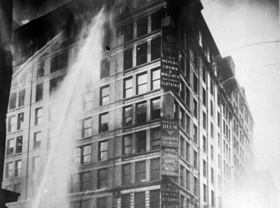
3. In both fires there were very few easily accesible exits as well as the abudance of obscurites such as machines and cloth in the triangle fire and nic nacs and furniture in the Oakland ghost ship fire. The lack of exits combined with the blocked paths to exits are what made both of these fires so dangerous and resulted in a massive loss of life.

Sources:
https://trianglefire.ilr.cornell.edu/story/introduction.html
http://www.nydailynews.com/news/national/urvivor-oakland-ghost-ship-fire-recalls-tragedy-article-1.2906006
http://www.nytimes.com/interactive/2016/12/12/us/oakland-warehouse-ghost-ship-fire.html
2. The fire started in the warehouse because of an overload on the electrical system in the warhouse most likely caused by all of the power used by the performers at the electronic dance party. There were so many victims because there were no fire alarms, no sprinklers and the two stairways from the second floor party did not lead to the buildings only two exits. Also there were many obscurities in the paths to exits so it was very hard for people to actually make it to the exits.
3. In both fires there were very few easily accesible exits as well as the abudance of obscurites such as machines and cloth in the triangle fire and nic nacs and furniture in the Oakland ghost ship fire. The lack of exits combined with the blocked paths to exits are what made both of these fires so dangerous and resulted in a massive loss of life.
Sources:
https://trianglefire.ilr.cornell.edu/story/introduction.html
http://www.nydailynews.com/news/national/urvivor-oakland-ghost-ship-fire-recalls-tragedy-article-1.2906006
http://www.nytimes.com/interactive/2016/12/12/us/oakland-warehouse-ghost-ship-fire.html
Subscribe to:
Comments (Atom)